Part 02 of 03 · Language & AI Series
Language & AILanguage & AI, Part 2: The Data
438 conversations. 6,824 messages. I described others with rich adjectives. Myself only with action verbs.
Clarity wasn't the only thing I was outsourcing.
My initial purpose for interacting with AI was simple: do more with less time. Efficiency became my obsession. With zero tolerance for fluff, my manifesto to GPT was: Don't try to please me. Data-driven output only. Be critical.
Without tone, body language, or history to rely on, I wanted AI to have as much context as possible to get the best output. But building context takes time, and time is a luxury I didn't have. So I took a shortcut.
By the end of 2025 I was running several projects simultaneously, feeding AI with half-baked prompts and manually mending mediocre results. I was optimizing for volume and not quality. The pattern was obvious: instead of creating smart systems, I was solving ad hoc tasks.
67 out of 438 conversations: that's how many times I defaulted to 'based on what you know about me' as my framing for getting something personalized.
Then I asked for deeper insights into my language patterns. Claude flagged something I wasn't expecting: a striking contrast in how I describe myself versus others.
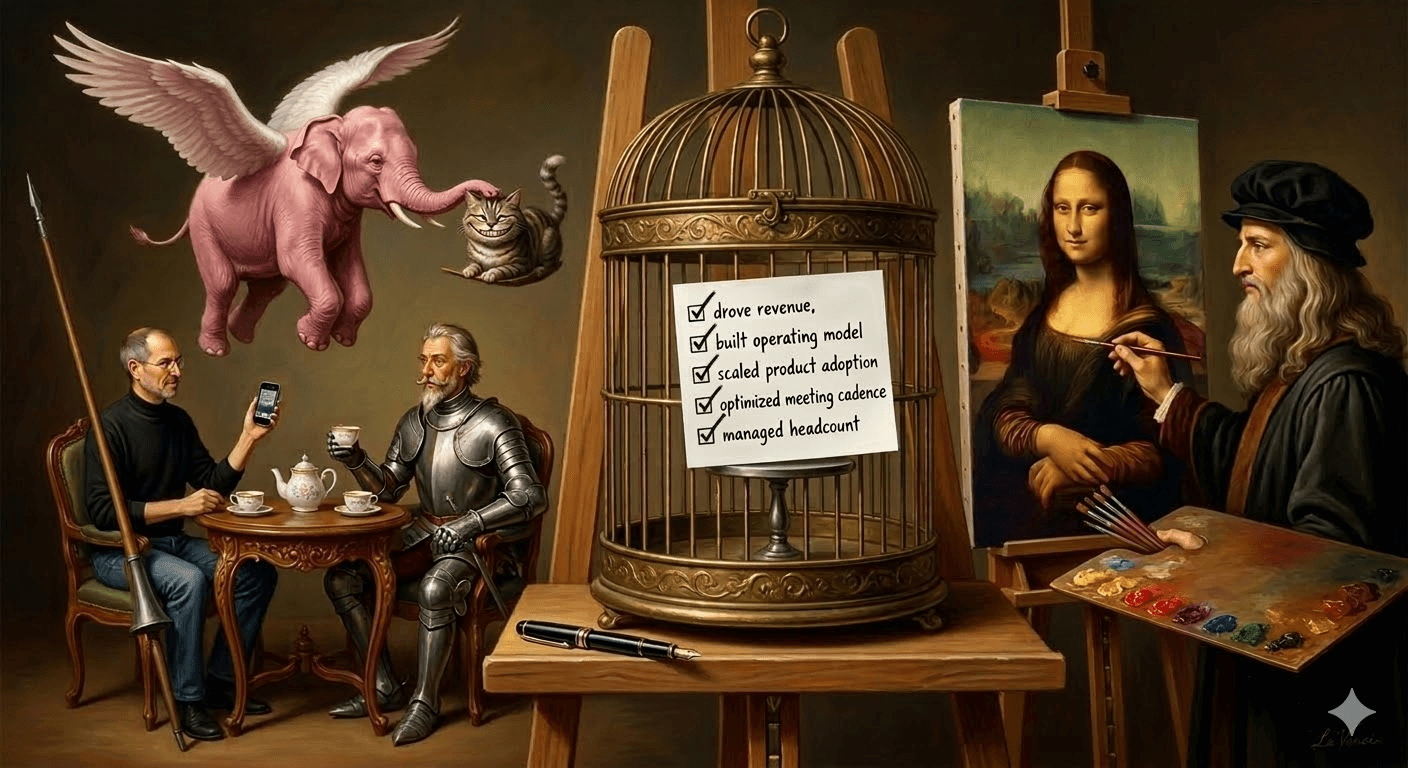
So I fed Claude 4.5 years of performance reviews. The pattern deepened. Across 4.5 years of reviews, I described others with words like 'force multiplier,' 'creates psychological safety,' and 'entrepreneurial spirit.' For myself: 'I drove,' 'I led,' 'I built.'
I gave others the full story. I gave myself a task list.
I was looking for blind spots in how I interact with AI. I didn't expect to find one in how I talk about myself.
Language is the ultimate tool for defining our reality. But what if the words you never use reveal more than the ones you do?